

Feminine Power at the Oberoi Hotel
By Varsha Sekaram
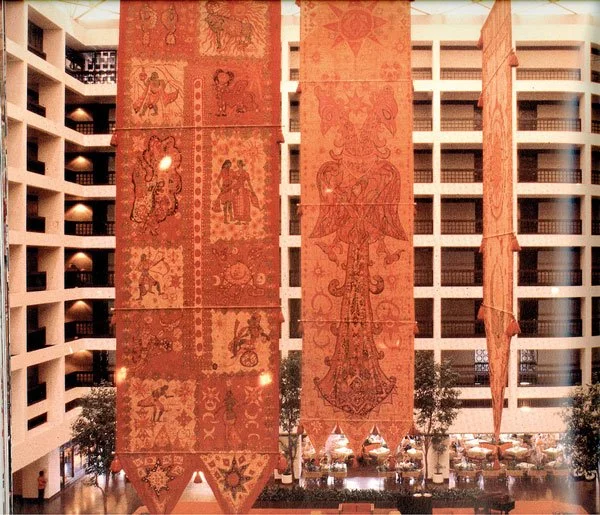
The three 62 foot long and 15-foot-wide giant pennants made by The Aluwihara Center for the Oberoi Hotel in Colombo
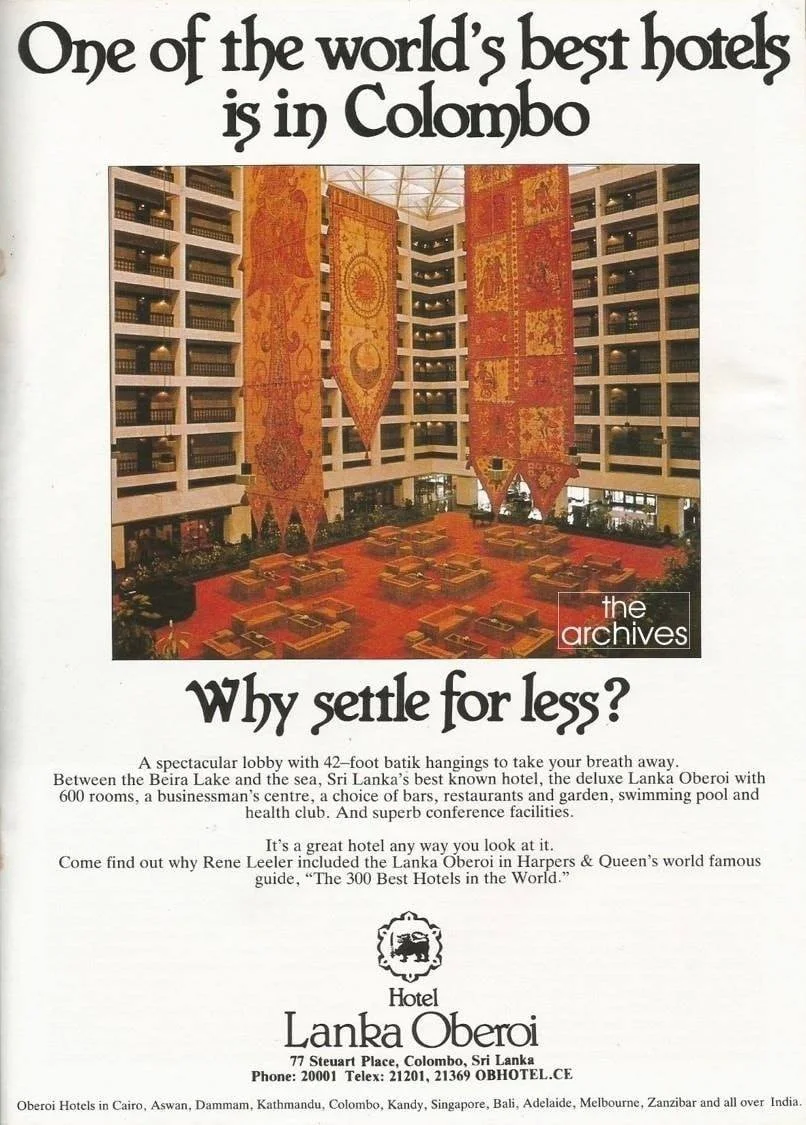
A leaflet of the Colombo Oberoi Hotel in 1975, showcasing the main atrium Space
From Traditional Craft to Contemporary Art: The Tale of the Aluwihara Center's Pennants. The Aluwihara center's impact is truly inspiring in multiple ways. Its founder, Ena De Silva was a trailblazer in reviving and contemporizing the ancient Southeast Asian art form of Batik..
In the late 1950s, during the emergence of the global modernist movement, a distinct Sri Lankan modernist style was discovered, rooted in our rich traditional culture that encouraged a fusion between local craftsmanship and contemporary architecture.
The Aluwihara Center played a pivotal role in this movement by creating vibrant and contemporary batiks, whose motifs and designs were influenced by the ornate Temple banners and flags, or "somanas," and medieval temples.
A stunning testament to Sri Lankan contemporary art is the three colossal Pennants or flags that graced the Atrium of the Oberoi Hotel (now Cinnamon Grand) in 1975 and continued to do so for three decades.
The team responsible for creating these magnificent banners was predominantly comprised of women. Ena De Silva's work and style were said to embody feminine power, as her brand of feminism involved elevating traditional female occupations and imbuing them with standards of excellence.
Image Credits Aluwihare Heritage Centre (@aluwihareheritagecentre)
